



May
21,
2026
Introducing a child to music doesn’t have to involve expensive instruments or years of lessons. Sometimes, the simplest tools spark the biggest ...
May
21,
2026
Introducing a child to music doesn’t have to involve expensive instruments or years of lessons. Sometimes, the simplest tools spark the biggest ...
Dec
30,
2025
Some harmonicas don’t just make music; they carry history. The Blues Harp and the Marine Band 1896 are two of those instruments. If you’ve been ...
Dec
17,
2025
If you’ve been exploring the world of chromatic harmonicas, you’ve probably come across the legendary Hohner Chrometta series.
Oct
31,
2025
If you’ve ever felt dizzy or out of breath while playing, you’re not alone. Breathing is the heartbeat of harmonica playing, literally.
Oct
07,
2025
Learning scales, songs, and techniques can make you a solid harmonica player, but what really sets musicians apart is their ability to improvise.
Aug
27,
2025
Learning the harmonica often begins with simple melodies, chordal rhythms, and expressive bends.
Aug
26,
2025
Let’s face it—there’s nothing more frustrating than a harmonica that sounds even slightly off.
Jul
30,
2025
For an instrument that fits in your front pocket, the diatonic harmonica sure knows how to make noise. Not just noise—soul.
Jul
02,
2025
If you've ever heard that sweet, almost vocal cry in a blues riff—or that soulful dip in a country lick—and wondered, “How on earth do they do ...
Jun
05,
2025
When professional harmonica players choose their instruments, it’s more than just picking a brand or a model—it’s selecting their musical partner.
Mar
31,
2025
Finding the best chromatic harmonicas isn’t about grabbing the priciest one off the shelf or blindly trusting a review. It’s about finding the ...
Mar
06,
2025
So, you’re thinking about picking up the harmonica? Great choice. This little instrument has a rich, soulful sound that fits into blues, rock, ...
Feb
25,
2025
The harmonica is a timeless instrument, loved for its versatility, portability, and ability to create heartfelt melodies.
Feb
05,
2025
When it comes to choosing a harmonica, the brand you pick plays a huge role in shaping your musical experience.
Oct
30,
2023
Did you know that the harmonica has been around for centuries, yet it's one of the most underappreciated instruments out there? It's true. While ...
Oct
30,
2023
If you're searching for the best diatonic harmonica, you'll soon find out there's a lot to consider. Interested? You should be. Knowing the ...
Oct
30,
2023
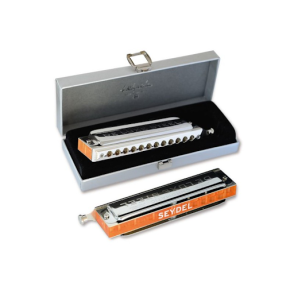
Did you know that the Seydel Chromatic De Luxe Steel is one of the few harmonicas in the world to feature stainless steel reeds? This isn't just a ...
Oct
30,
2023
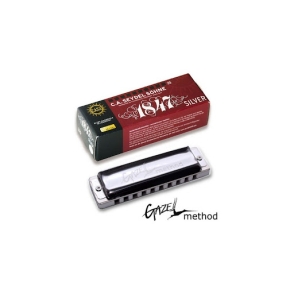
Think you know everything there is to know about harmonicas? Well, prepare to be amazed. The Seydel 1847 Silver Harmonica is here to shatter all ...
Sep
12,
2023
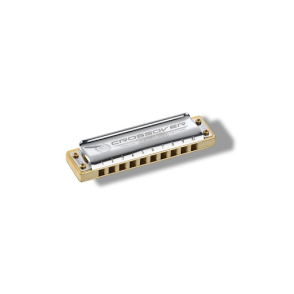
The Hohner Crossover harmonica is a true gem in the world of harmonicas. Designed with a serious player in mind, this harmonica offers a perfect ...
Sep
12,
2023
Welcome to our captivating blog, where we embark on a musical journey delving into "The Evolution of Chromatic Harmonicas: A Historical Overview." ...
No Blog Post Found

But at some point, serious players start searching for a way to expand the instrument’s range beyond its natural limits.
The answer is overblowing on a harmonica, an advanced technique that pushes the instrument beyond its usual range.
It opens up chromatic possibilities on a diatonic harp, letting you play notes that aren’t typically available, and when mastered, it can completely change the way you approach the instrument.
On a standard 10-hole diatonic harmonica, each hole produces two notes: one when you blow and another when you draw.
With bending, players can modify certain notes, usually on the draw reeds in the lower register and blow reeds in the upper register. Overblowing takes things a step further.
Instead of bending the pitch downward, overblowing on a harmonica redirects air pressure in such a way that it silences the active reed and activates its opposite partner.
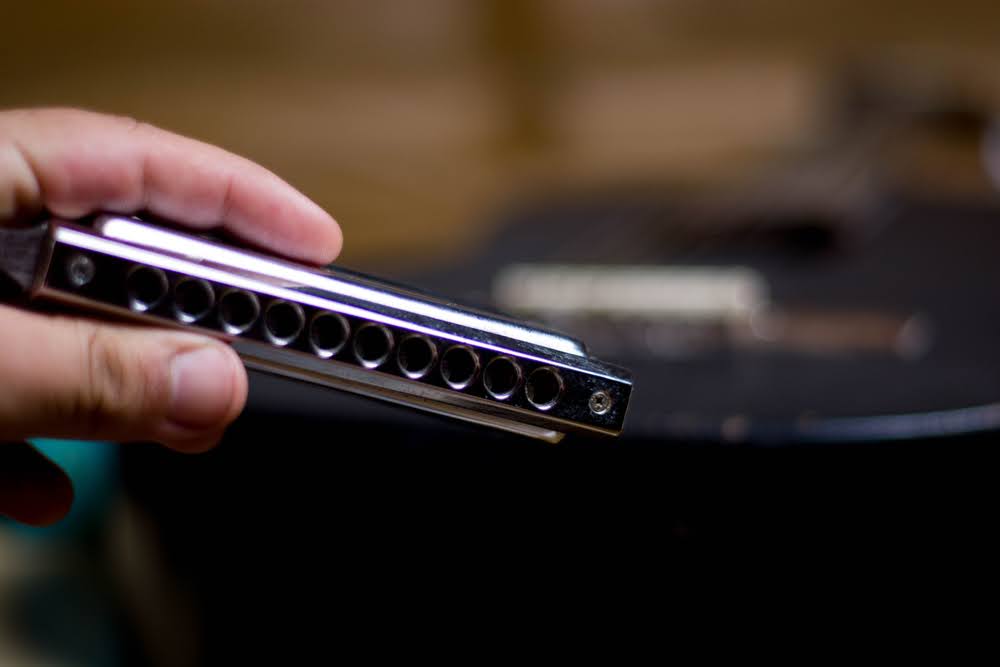
This produces a new, higher-pitched note, one that isn’t part of the harp’s “natural” tuning.
It’s an advanced technique, no doubt, and it takes time to practice and truly master. But once it all clicks, the payoff is huge: Access to all 12 notes of the chromatic scale on a diatonic harmonica.
This technique was pioneered by players like Howard Levy, who showed the harmonica community that a small blues harp could perform complex jazz, classical, and world music lines once thought impossible.
For decades, diatonic harmonicas were thought to be “limited instruments” compared to the chromatic harp or piano. Overblowing shattered that belief. With the right technique, a player can:
In short, mastering overblows means mastering freedom.
At first, overblowing feels counterintuitive. The key lies in controlling airflow and maintaining an effective embouchure. Here are the fundamentals:
Some harmonicas, especially higher-end models, are designed with overblows in mind. If you’re struggling to get consistent results, the issue may be your instrument rather than your technique.
Here’s a practical roadmap to start experimenting with overblowing:
Like any advanced harmonica skill, consistency comes with patience.
Overblowing isn’t easy, and most players encounter roadblocks:
.jpg)
It’s also worth noting that overblows aren’t meant to replace bends or traditional phrasing—they complement them. Think of it as adding extra colors to your palette, not replacing the primary ones.
If you want inspiration, listen to these harmonica pioneers:
Studying their recordings is like getting a masterclass in what’s possible once you embrace this technique.
In the end, learning overblowing on a harmonica is less about “tricks” and more about reimagining what the instrument can do.
As we’ve seen, one of the main differences between diatonic and chromatic harps is that chromatics are built to play all 12 notes of the scale, while diatonics are tuned to a specific key.
So, overblowing can bridge that gapand unlock the missing notes. With practice, patience, and the right harp setup, you’ll unlock new tonal possibilities that expand your playing across genres.
Whether you’re chasing jazz improvisation, blues complexity, or just want to surprise yourself with fresh sounds, overblows are a gateway to next-level musicianship.
If you’re serious about expanding your skills, having the right instrument makes a world of difference.
Professional players often rely on finely tuned harmonicas that respond well to advanced techniques like overblowing.
At Harmonicaland, you’ll find a wide selection of top-quality harmonicas for sale, ideal for both beginners stepping into this new world and experienced players refining their sound.
With the right harp in hand, your next breakthrough is just a breath away.
Reach out today and pick the harmonica that inspires you to play your best!





![How to Bend Notes on Your Harmonica [Ultimate Guide]](/modules/tvcmsblog/views/img/blog_left-bending-notes.jpg)

Comments : 14